
Silicone vs. ABS Personal Massagers: Materials, Safety & Buying Guide
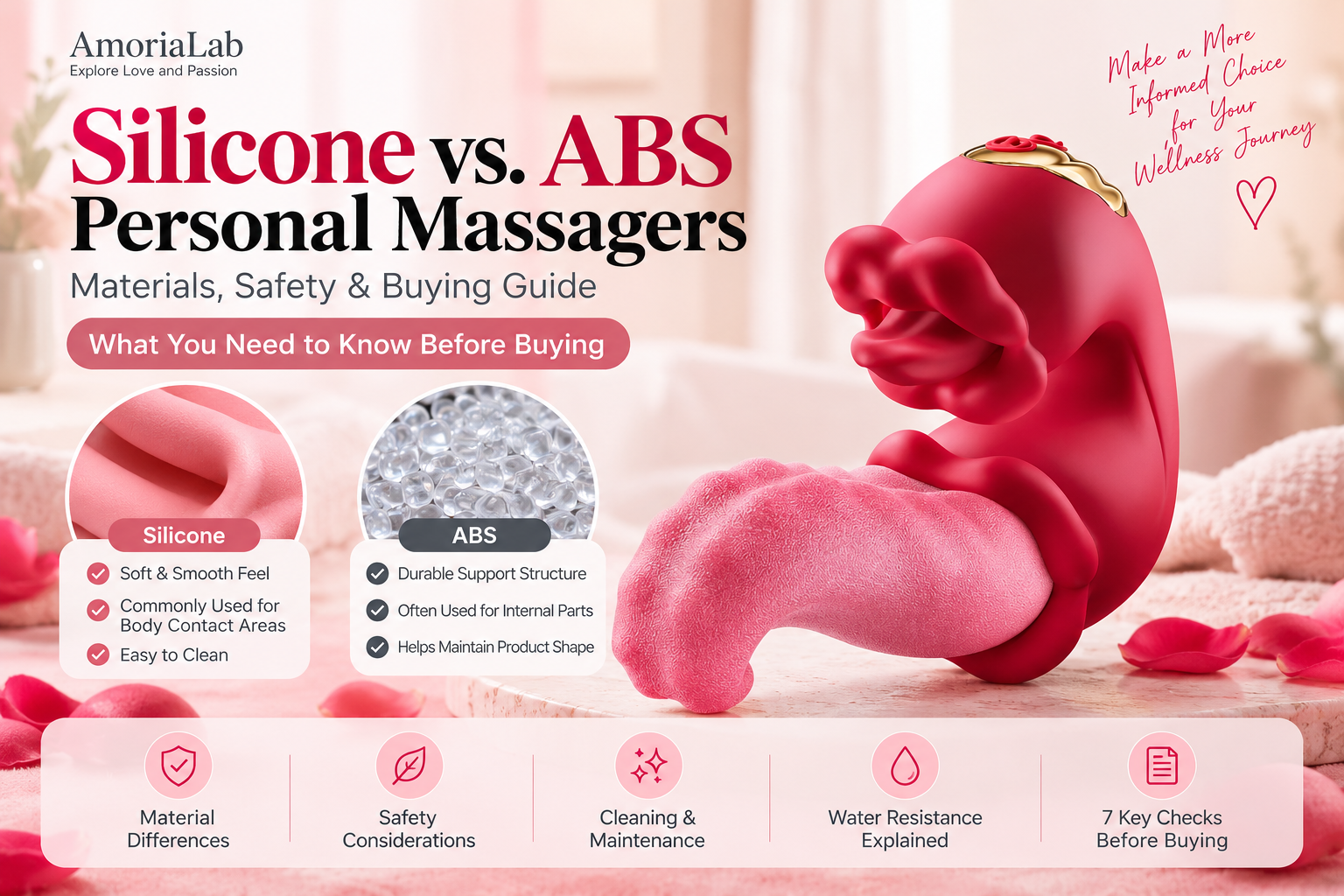
When comparing personal wellness devices, most shoppers start with functions, settings, or design. But there is another important question: What materials are used to make the product?
Silicone and ABS plastic are commonly found in personal massagers. They have different physical properties and can serve different purposes within the same device.
Understanding these differences can help you evaluate product descriptions, identify useful specifications, and make a more informed buying decision.
Quick Answer: Silicone vs. ABS
Silicone is an elastomer that can provide a soft, flexible surface. ABS is a comparatively rigid thermoplastic often used for housings and structural components. Some personal massagers combine both materials. Neither material name alone proves that a finished product is safe, waterproof, certified, or suitable for every type of body contact.
If you are new to personal wellness products, begin with our Personal Wellness for Beginners: The Complete Guide .
1. Why Do Personal Massager Materials Matter?
Materials influence how a product feels, how its parts are constructed, and which care instructions may apply.
When evaluating a personal massager, consider:
- Surface feel: Is the relevant surface soft, flexible, or firm?
- Construction: Which materials are used for external and internal components?
- Contact areas: Which parts are intended to touch the body?
- Cleaning: What methods does the manufacturer recommend?
- Product documentation: Are material specifications and relevant test claims supported?
A material description is a useful starting point, but it should not replace an assessment of the complete product.
2. What Is Silicone?
Silicone is a family of polymer materials that can be formulated into flexible, rubber-like products.
In personal wellness devices, silicone may be used for exterior surfaces or flexible components, depending on the design.
Common Characteristics of Silicone
- Can be manufactured with a soft or flexible feel.
- Can form smooth or textured surfaces.
- May be used over a more rigid internal structure.
- Requires cleaning and care appropriate to the finished product.
Silicone formulations are not all identical. A product described simply as "silicone" does not automatically establish its grade, chemical composition, testing history, or suitability for a particular application.
3. What Is ABS Plastic?
ABS stands for acrylonitrile butadiene styrene, a thermoplastic widely used in manufactured consumer products.
Compared with flexible silicone, ABS is generally more rigid. Depending on the design, it may be used in an external housing, internal support, or other structural component.
Common Characteristics of ABS
- Relatively rigid compared with flexible silicone.
- Can be molded into detailed product components.
- May provide structural support for an assembled device.
- Can be used in housings around electronic components.
ABS is not inherently unsuitable simply because it is a plastic. Its appropriateness depends on the formulation, intended use, contact conditions, product construction, and supporting evidence.
4. Silicone vs. ABS: Key Differences
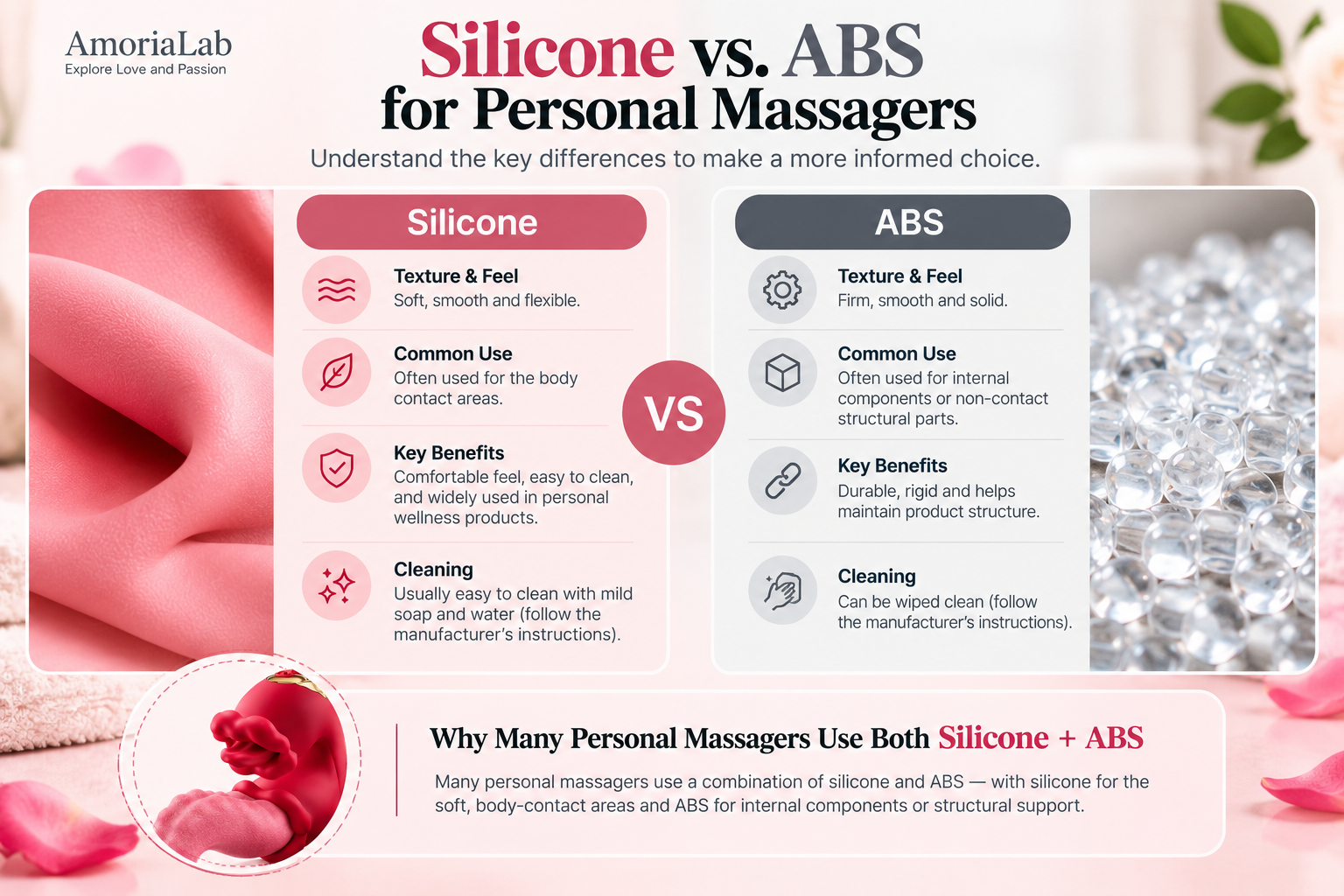
| Feature | Silicone | ABS |
|---|---|---|
| Material type | Elastomer | Thermoplastic |
| Typical feel | Soft or flexible, depending on formulation | Firm and rigid |
| Potential role | Flexible exterior or contact surface | Housing or structural component |
| Flexibility | Often flexible | Generally rigid |
| Cleaning | Follow device-specific instructions | Follow device-specific instructions |
| Waterproof? | Not established by material name | Not established by material name |
| Safety certification? | Requires product-specific evidence | Requires product-specific evidence |
Key takeaway: Silicone and ABS are not always competing alternatives. In some products, they perform complementary functions.
5. Why Do Some Personal Massagers Use Both Silicone and ABS?
A device may combine a flexible silicone component with a more rigid ABS component to achieve a particular shape or structure.
For example, a manufacturer might use silicone on selected exterior areas and ABS in a supporting housing.
However, the exact placement of these materials cannot be determined from a generic "Silicone + ABS" specification alone. A product diagram, manufacturer documentation, or other verified construction information is needed to confirm where each material is used.
6. What Does "Body-Safe" Actually Mean?
"Body-safe" is frequently used in product marketing, but the phrase by itself is not proof that a product has passed a specific test or certification.
When you see terms such as "body-safe," "medical-grade," "non-toxic," or "hypoallergenic," look for details supporting those statements.
Questions Worth Asking
- Which exact material or component is being described?
- What is the product's intended use?
- Does the manufacturer identify relevant testing or standards?
- Is documentation available for the finished product or relevant component?
- Are there clear instructions and limitations for use and care?
The presence of silicone does not automatically make every finished product medically certified, hypoallergenic, or suitable for all users.
7. Does Silicone Mean a Personal Massager Is Waterproof?
No. Silicone construction alone does not establish water resistance for the complete device.
Water may enter a device through seams, controls, charging connections, or other openings if the finished assembly is not designed and tested to resist it.
Before exposing an electronic product to water, check the manufacturer's stated water-resistance information and cleaning instructions.
Terms such as "splash-resistant," "water-resistant," and "submersible" should not be treated as equivalent.
8. How Should Silicone and ABS Devices Be Cleaned?
Cleaning guidance depends on the entire product, not just one listed material.
An electronic personal massager may include components that require protection from moisture or particular cleaning products.
Follow the instructions provided with the device. Do not assume that a silicone exterior means the complete product can be submerged or rinsed under running water.
For a more detailed care guide, read How to Clean a Personal Massager Safely .
9. Seven Things to Check Before Buying
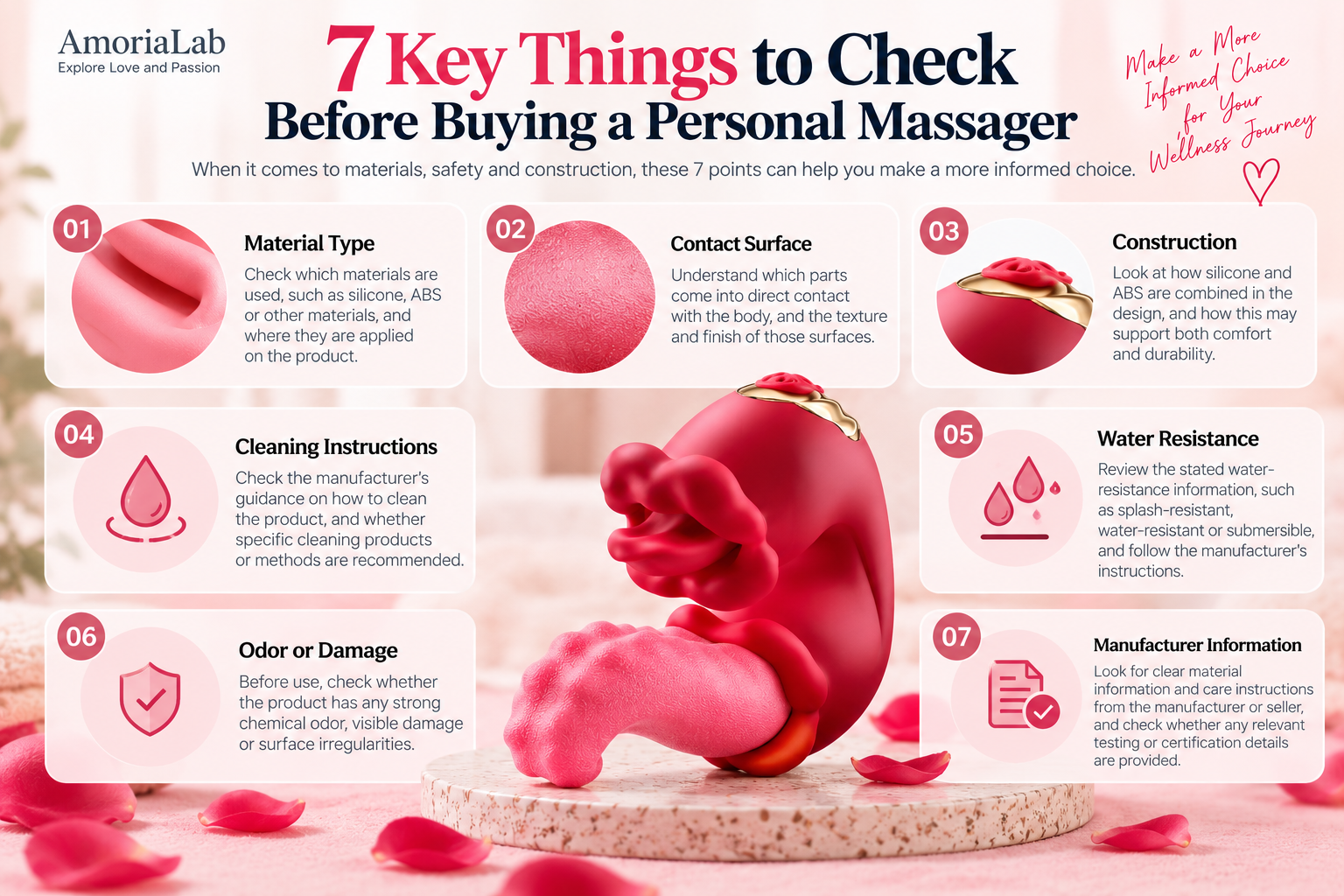
- Material type: Identify the listed materials and where they are used.
- Contact surfaces: Check which components are intended to touch the body.
- Construction: Review the shape, assembly, seams, and any available construction information.
- Cleaning instructions: Confirm how the manufacturer recommends cleaning the product.
- Water resistance: Look for an explicit manufacturer specification rather than assuming waterproofing.
- Odor or visible damage: Inspect the product for unusual odors, cracks, deterioration, or surface irregularities. If anything appears abnormal, stop using it and contact the seller.
- Manufacturer information: Look for clear specifications, instructions, and evidence supporting any testing or certification claims.
A Better Way to Compare Products
Use this checklist alongside your preferred movement type, controls, size, and other practical features. For more guidance, read How to Choose a Multi-Function Personal Massager: 7 Features That Actually Matter .
10. Applying the Material Checklist to a Real Product
One example from the AmoriaLab collection is the 3-in-1 Swinging Vibrating Personal Massager for Women .
This product is described as combining automatic swinging, vibration, and textured stimulation. The available supplier specifications list silicone and ABS among its materials.

Product Details
| Listed materials | Silicone + ABS (supplier specification) |
|---|---|
| Main functions | Swinging, vibration, textured stimulation |
| Controls | Dual-button control |
| Dimensions | 14 × 10 × 3.5 cm |
| Listed weight | 223 g |
| Water-resistance rating | Not confirmed in the available documentation |
| Material testing or certification | Supporting documentation not provided for this guide |
Note: Listed materials and dimensions are based on available supplier information. Review the current product listing and contact AmoriaLab if you need additional specifications or supporting documentation before purchasing.
NEW CUSTOMER OFFER
Save 10% on Your First Order
Discover the AmoriaLab collection and use WELCOME10 at checkout.
Available for eligible first orders. Current promotion terms and exclusions apply at checkout.
View Product →Frequently Asked Questions
1. What materials are commonly used in personal massagers?
Personal massagers may use silicone, ABS, and other polymers or components. The materials and their placement vary by product design.
2. Is silicone better than ABS for personal massagers?
Not universally. Silicone may be selected for flexible surfaces, while ABS may be used for rigid housings or structural parts. Suitability depends on the intended use and finished product.
3. Why do some personal massagers combine silicone and ABS?
A combination can allow flexible and rigid components to perform different functions within one device. The exact arrangement must be confirmed for each product.
4. Does silicone automatically mean body-safe?
No. The material name alone does not establish the safety of a finished product. Relevant formulation, intended use, construction, and supporting test information matter.
5. Does a silicone exterior mean a massager is waterproof?
No. Water resistance depends on the complete device design and any applicable manufacturer testing or specifications.
6. How should I clean a silicone personal massager?
Follow the instructions for the specific product. Do not assume an electronic device can be submerged or rinsed simply because silicone is listed as a material.
7. What material should beginners look for?
Beginners should consider material transparency, intended contact surfaces, product construction, care instructions, and evidence supporting any safety claims, rather than choosing solely by a material label.
8. What should I do if a product has an unusual odor or damaged surface?
Stop using the product and contact the seller or manufacturer for guidance. Do not continue using a device with visible deterioration or unexplained damage.
Continue Exploring Personal Wellness
- Personal Wellness for Beginners: The Complete Guide
- The Ultimate Guide to Choosing Your First Wellness Companion
- How to Clean a Personal Massager Safely
- How to Choose a Multi-Function Personal Massager
- Suction vs. Vibration Massagers: What's the Difference?
- Quiet Personal Massagers for Women: A Buying Guide
Choose With Better Information
The right buying decision begins with clear specifications, practical care information, and an understanding of how a product is constructed.
Explore the AmoriaLab 3-in-1 →Editorial note: This article provides general product education, not medical advice or certification of any particular device. Specifications may change. Always follow the instructions supplied with the product.


